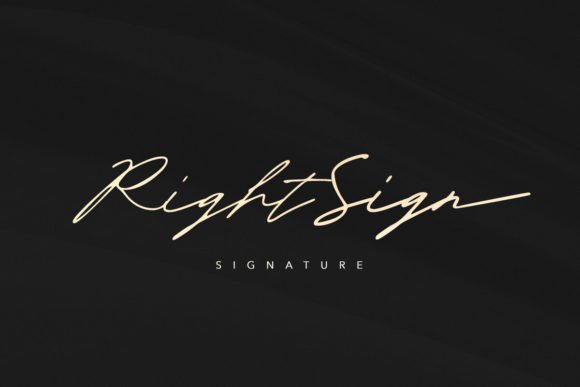
Right Sign: A Handwritten Font for Authentic Digital Signatures
There’s a certain warmth in a handwritten signature that digital text often misses. It carries a personal touch, a sense of intention and identity. Right Sign is a typeface designed to capture that feeling. It’s a premium, handwritten font with carefully crafted ligatures and alternates, offering a natural, flowing script that feels both personal and polished. Coming in Regular and Bold weights, it provides flexibility for different design needs without losing its core character.
More Than Just Script: The Character of Right Sign
Right Sign isn’t your typical script font. Its visual personality is rooted in authenticity. The letterforms mimic the slight inconsistencies and fluid connections of real handwriting, thanks to its extensive set of ligatures and alternate characters. This means text set in Right Sign avoids the repetitive, mechanical look that can plague digital scripts. Each word can feel unique, much like actual handwriting.
The overall appeal is modern yet approachable. It strikes a balance between being stylish enough for branding and legible enough for short-form content. The Regular weight offers a clean, elegant line perfect for smaller applications, while the Bold weight provides stronger presence and emphasis, making it versatile for headlines, logos, and callouts. It’s a creative font that doesn’t sacrifice readability for style.
Where Right Sign Truly Shines: Practical Applications
The true test of any design asset is how it performs in real projects. Right Sign excels in scenarios where a human touch is needed to build connection and trust.
For Brand Identity and Logo Design
A logo sets the tone for an entire brand. Using Right Sign in a logo or as a secondary typeface in a brand identity system can inject personality and warmth. It’s particularly effective for businesses that want to appear artisanal, personal, or service-oriented—think boutique studios, consultants, coaches, or lifestyle brands. Pair it with a clean sans serif font for body text to create a clear visual hierarchy that feels both professional and friendly.
In Marketing and Social Media Graphics
Attention is currency on social media. A handwritten font like Right Sign can make quotes, testimonials, or call-to-action text stand out in a crowded feed. Its authentic style helps content feel more genuine and less corporate, which can boost engagement. For marketers, it’s a useful tool for creating cohesive ad graphics, email headers, or promotional materials that need a personal flair without looking unprofessional.
Publishing and Editorial Design
In editorial design, Right Sign works beautifully for pull quotes, chapter titles, or special section headers in magazines, blogs, and digital publications. It adds visual interest and breaks up blocks of text from a standard serif font or sans serif font. For publishers, it can help define a recurring feature or column, creating a recognizable signature style within the layout.
Packaging and Product Design
Packaging design thrives on shelf appeal and storytelling. Right Sign can be used on labels, tags, or box art to convey craftsmanship and care. Imagine it on a artisan coffee bag, a handmade soap label, or a boutique candle box. It immediately suggests the product has a personal touch, enhancing the perceived value and brand story.
Integrating Right Sign: A Designer's Practical Guide
Choosing the right display font involves more than just liking how it looks. Here’s how to evaluate and use Right Sign effectively.
Evaluating Project Fit: First, consider your project’s tone. Right Sign suits projects aiming for warmth, authenticity, and a personal connection. It may be less appropriate for ultra-corporate, technical, or highly formal contexts where a neutral typeface is expected. Ask yourself: does my audience respond to personal, human-centric branding?
Testing Font Pairings: The key to successful font pairing is contrast and harmony. Right Sign, as a script font, pairs best with simple, geometric sans serifs or classic serifs. Avoid pairing it with other decorative or overly complex fonts. Test combinations by setting a headline in Right Sign Bold and body copy in a font like Open Sans, Lato, or a timeless serif like Georgia. Ensure the sizes and weights create a balanced hierarchy.
Leveraging Styles and Features: Don’t just type and go. Explore the font’s OpenType features. Use the alternates and ligatures to customize the look of specific words or logos, ensuring the text feels fluid and intentional. The Bold weight is excellent for emphasis, but use it sparingly to maintain its impact.
Readability Considerations: As with any handwritten font, readability diminishes with length. Right Sign is not suited for long paragraphs or small body text. Use it for short bursts of text—headings, labels, logos, and quotes. Always check legibility at the intended size, especially for web design and mobile screens.
Understanding the License: If you’re using Right Sign for commercial work—a client’s logo, a product for sale, or paid advertising—ensure you have the correct commercial license. This is standard practice for any premium font and protects both you and your client.
Right Sign is more than just a set of letters; it’s a design tool for adding a layer of human connection to your work. By understanding its personality and applying it thoughtfully, you can enhance brand perception, create more engaging visuals, and bring a genuine touch to a wide range of creative projects. Its strength lies in its ability to bridge the gap between digital precision and the irreplaceable feel of the human hand.