I Love You Mom: The Handwritten Font with Whimsical Charm
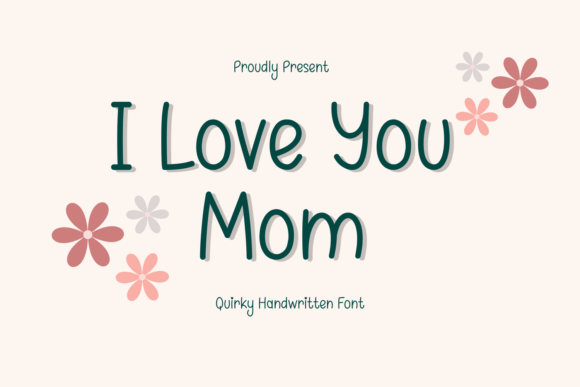
When a design calls for something more human than a geometric sans serif, and more playful than a standard script, the solution often lies in a handwritten font. I Love You Mom is a prime example of a typeface that captures the spontaneous, carefree energy of a quick note scribbled on a napkin or a heartfelt message in a greeting card. It’s not trying to be perfectly polished; it’s trying to be real.
This premium font distinguishes itself through its irregular strokes and bouncing baseline. If you look closely at the letterforms, you’ll notice that no two characters sit at exactly the same height. This intentional imperfection is what gives the font its "dancing" quality. It creates a rhythm that guides the eye across the page without feeling rigid. For designers, this means you get instant personality without having to manually adjust the kerning and tracking to simulate a natural hand.
Finding the Right Home for This Typeface
Understanding where I Love You Mom fits into your toolkit is crucial. Because it is a display font, it shines brightest when used for headlines, logos, or short bursts of text where impact matters more than long-form legibility. You wouldn't want to set a 500-word blog post in this font, but for a hero image on a website? It’s perfect.
Consider the context of brand identity. If you are building a brand for a boutique bakery, a children’s clothing line, or a handmade jewelry shop, this typeface speaks the right language. It suggests warmth, approachability, and a human touch. In packaging design, using I Love You Mom can break down the barrier between the product and the consumer. It feels like a friendly recommendation rather than a corporate mandate.
Here are a few specific applications where this font excels:
- Social Media Graphics: On platforms like Instagram or Pinterest, where users scroll quickly, a creative font like this stops the thumb. It adds energy to quotes, announcements, and sale tags.
- Editorial Design: In magazines or newsletters, it works well for pull quotes or subheadings to break up the monotony of body text set in a standard serif font or sans serif font.
- Greeting Cards & Stationery: This is its natural habitat. Whether for digital e-cards or printed stationery, the font conveys emotion effectively.
- Logo Design: For small businesses wanting a casual, approachable vibe, this typeface can serve as a logomark that feels personal and inviting.
The Art of Font Pairing
One of the most common mistakes I see with handwritten fonts is pairing them with the wrong partner. Because I Love You Mom is highly stylized and energetic, it needs an anchor. If you pair it with a complex script font, the design becomes chaotic and unreadable. If you pair it with a very rigid, futuristic sans serif, the contrast might be too jarring.
The best approach is to let I Love You Mom do the talking while a neutral companion handles the supporting details. Here is a practical guide for font pairing:
- Pair with a Clean Sans Serif: Fonts like Open Sans, Lato, or Montserrat provide a clean, modern backdrop. They allow the quirks of I Love You Mom to stand out without competing for attention. This combination works great for web design and social media graphics.
- Pair with a Traditional Serif: For a more editorial look, try pairing it with a classic serif like Garamond or Merriweather. The contrast between the structured serif and the loose handwriting creates a sophisticated yet approachable hierarchy.
- Use for Contrast: In editorial design, use a clean serif for the body copy and I Love You Mom for large pull quotes. This draws the reader’s eye to key phrases and adds a layer of visual interest.
Evaluating Fit and Readability
Before you commit to using I Love You Mom in a commercial font project, you need to test it in context. Modern typography is about adaptability. A font might look great on a desktop screen but lose its charm on a mobile device if the x-height is too low or the strokes are too thin.
When testing this typeface, pay attention to the following:
- Size Matters: Handwritten fonts generally require larger sizing to remain legible. Test it at the size you intend to use. If the loops of the 'e' or 'a' close up, it's too small.
- Color and Contrast: Because the strokes are irregular, high contrast is essential. Avoid placing light weights of this font over busy backgrounds. A solid background color usually works best to maintain readability.
- All Caps vs. Lowercase: Check how the font handles capital letters. Often, handwritten all-caps text can look aggressive or messy. I Love You Mom usually works best with sentence case or title case to maintain that friendly vibe.
Licensing and Professional Use
As with any design asset, understanding the licensing is non-negotiable. If you are a small business owner or a freelance designer, you need to ensure the license covers your specific use case. Does the license allow for logo design? Can you embed the font in an app or an e-book?
Since I Love You Mom is positioned as a premium font, it likely comes with a robust license, but always read the fine print. "Commercial use" can mean different things to different foundries. Ensure that your client also has the appropriate license if you are handing off files, or that you are outlining font usage in your contracts.
Ultimately, I Love You Mom is a tool for adding soul to a design. It strips away the corporate stiffness and replaces it with authenticity. In a digital world that is increasingly automated and sterile, a handwritten font like this serves as a reminder that there is a human on the other side. Use it to connect, to delight, and to make your next project truly stand out.